45 Years of Experience
Transform by-products with high ash or acidity content into premium ingredients, reaching demineralization rates of up to 90% to access the most demanding markets such as infant nutrition, with a lower operating cost than traditional ion exchange.
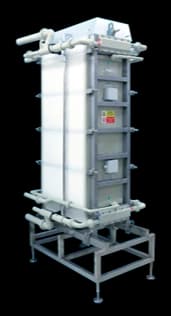
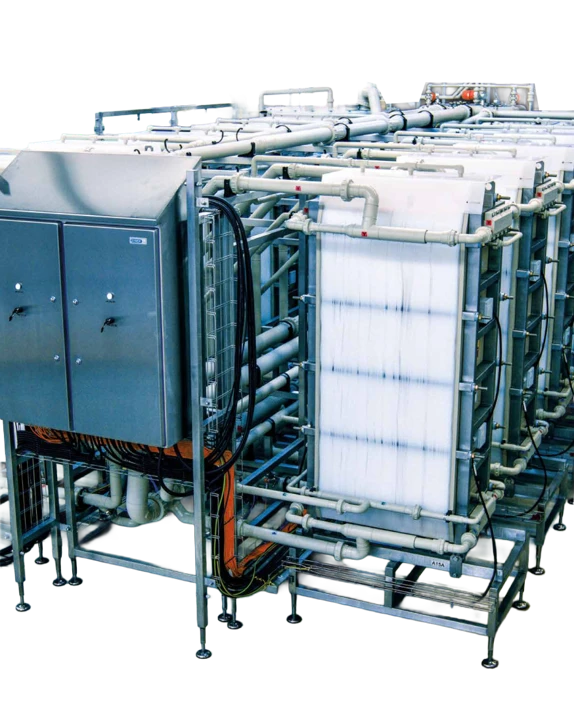
ELECTRODIALYSIS IN THE DAIRY INDUSTRY
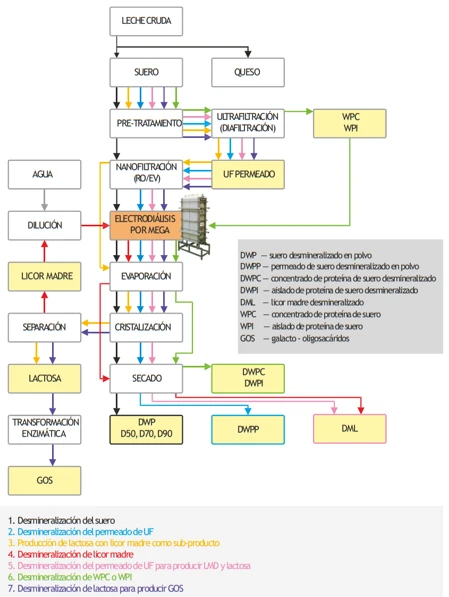
Although the dairy industry already processes sweet whey at large scale — used in a wide variety of products such as infant foods, sports nutrition, and others — acid whey represents a greater challenge for many cheese producers.
Although both are composed of 94% water, acid whey has a proportionally lower protein content, a higher concentration of minerals such as calcium and phosphorus, organic acids, and salts that cause problems and reduce the viability of downstream processing.
Electrodialysis demineralization reduces the amount of these compounds, presenting highly profitable new opportunities for the utilization of acid whey.
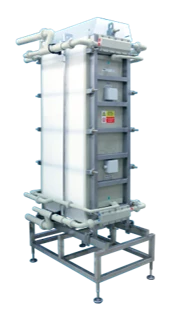
TITRATABLE ACIDITY REDUCTION
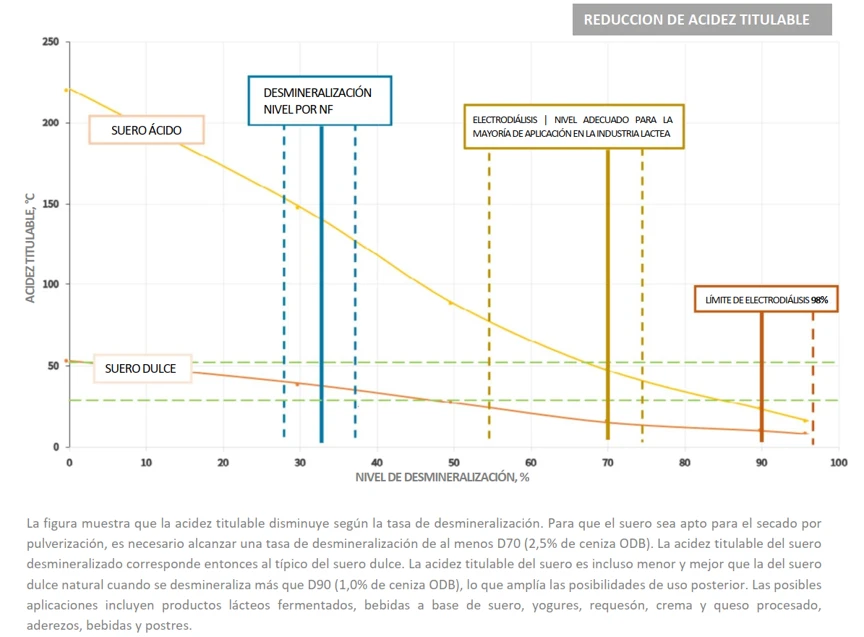
The chart shows that titratable acidity decreases according to the demineralization rate. For whey to be suitable for spray drying, a demineralization rate of at least D90 must be achieved. The titratable acidity of demineralized whey corresponds to that of natural sweet whey, or is even better when demineralization exceeds D90. Possible applications include fermented dairy products, whey-based beverages, yogurt, cottage cheese, cream and processed cheese, dressings, drinks and desserts.