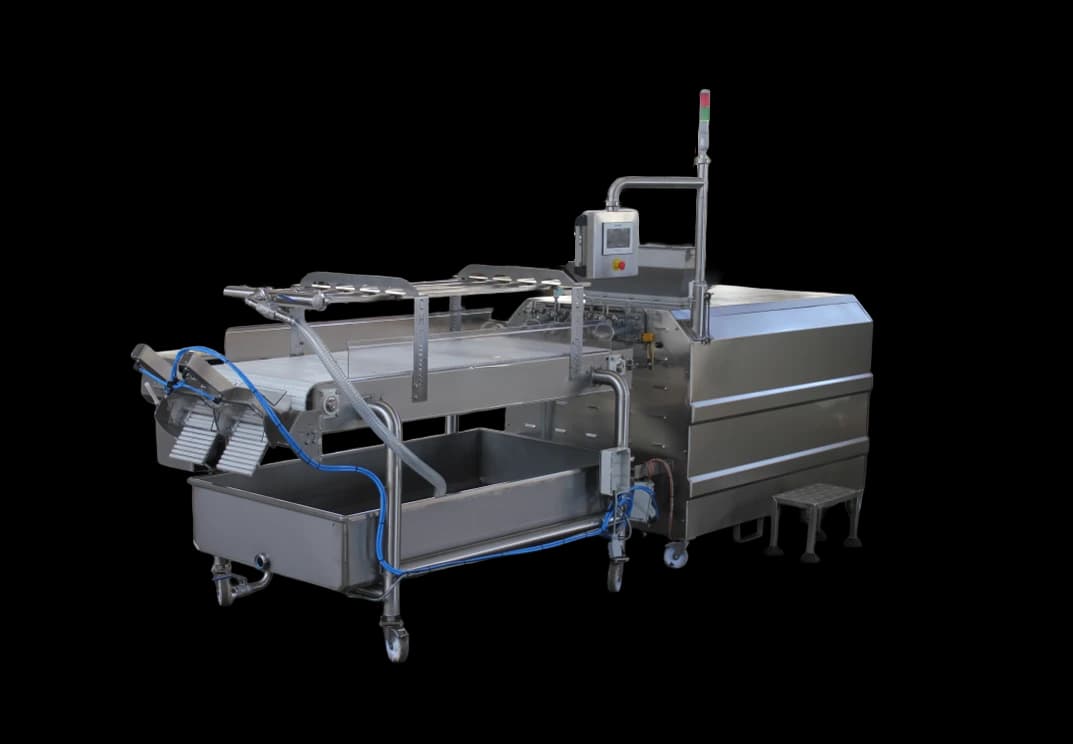
Automate a traditionally manual operation to reduce payroll costs and eliminate weight variability in the final product. Capacity: 600-700 kg/h.
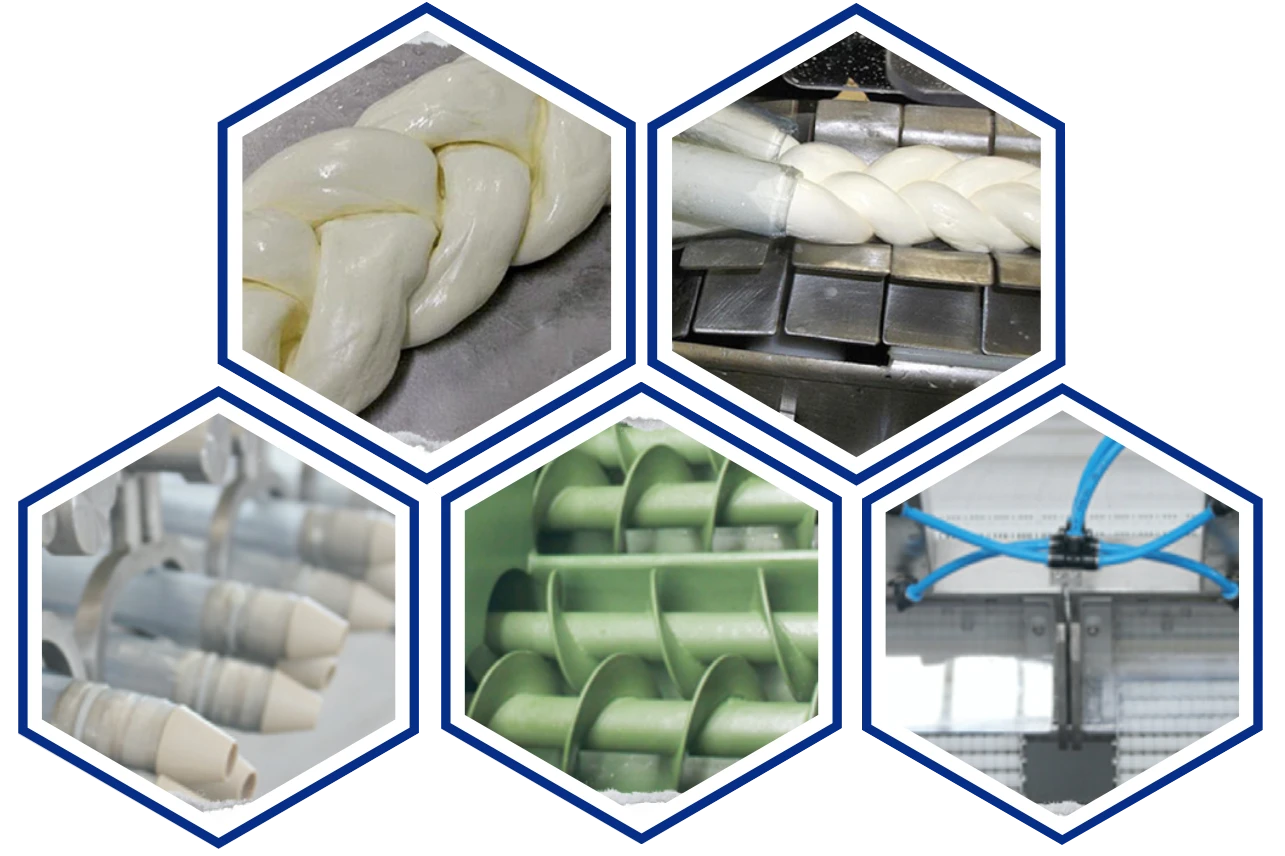
Continuous system for forming, braiding, cooling and cutting pasta filata type cheese. Capacity of 600-700 kg/h with PLC control. Replaces intensive manual handling, guaranteeing safety, consistency in texture and precise cuts ready for packaging. Maximize the profitability of your stretched cheese line through industrial standardization of braiding, achieving critical reduction in process times and handling losses. This equipment integrates after the stretching and cooking stage. The hot pasta is introduced into the feed hopper, where a screw system pushes it towards mechanical braiding heads (gearbox) that replicate the traditional Oaxaca Cheese structure. The formed product is immediately deposited on a conveyor belt with pre-cooling system by spraying to fix the braiding structure. Finally, an automated pneumatic blade performs exact length cuts before discharging the product into the final cooling vat, delivering standardized units ready for packaging. PLC Automation and Pneumatic Cutting: Allows programming head speed and cutting frequency with millimeter precision. This ensures each unit has the same length and weight, facilitating inventory control and complying with net content regulations without giving away product. Sanitary Construction in Stainless Steel AISI 304/316: Manufactured entirely in food contact grade steel with Teflon coating or sandblasting finish options. This guarantees resistance to chemical corrosion during CIP cleaning cycles and prevents hot pasta adhesion. Integrated Pre-Cooling System: The conveyor belt includes a heat exchanger and cold water spraying (optimized consumption) that reduces the cheese surface temperature immediately after braiding. This prevents braid deformation by its own weight and preserves the visual definition of the product. Production Scalability: Available in single head or multi-head configurations, allowing adapting the investment to the plant's current milk flow with capacity to respond to demand peaks. Hygiene and Operational Safety: By eliminating direct manual contact during braiding, bacterial load and cross-contamination risk are drastically reduced, extending product shelf life.