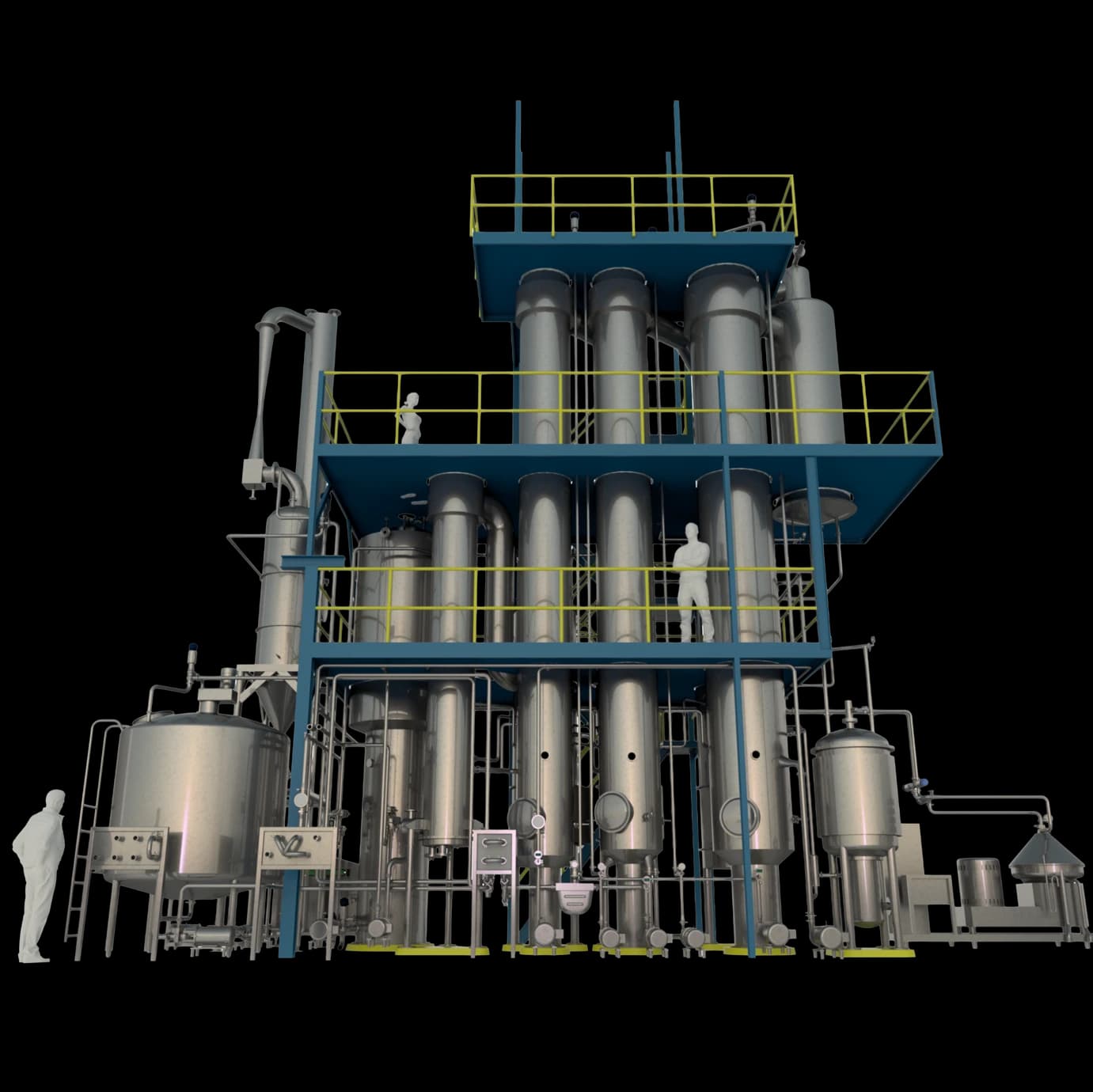
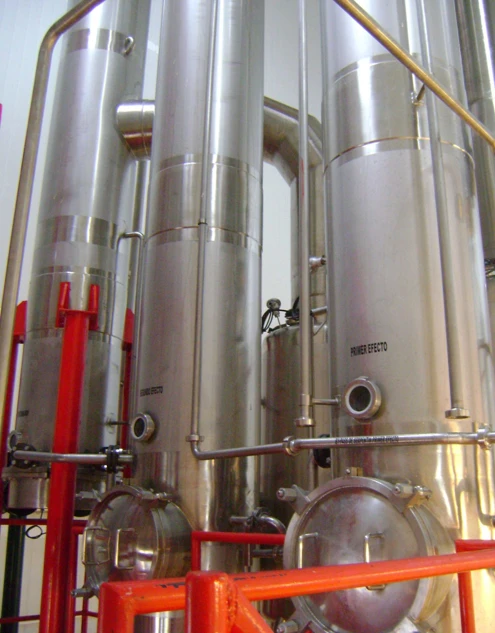
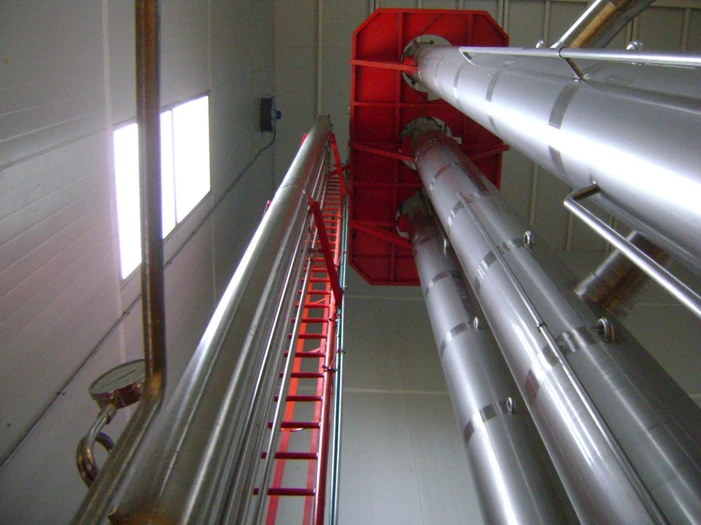
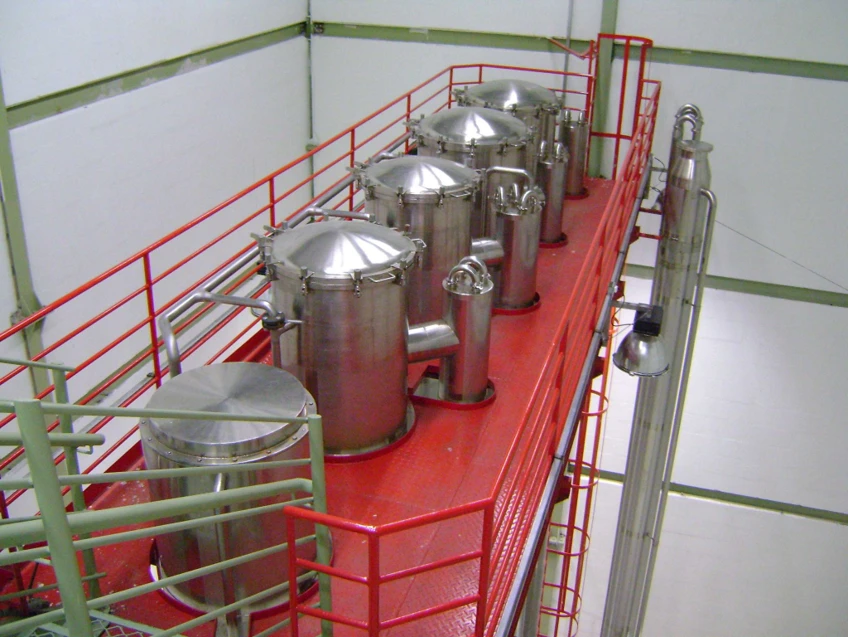
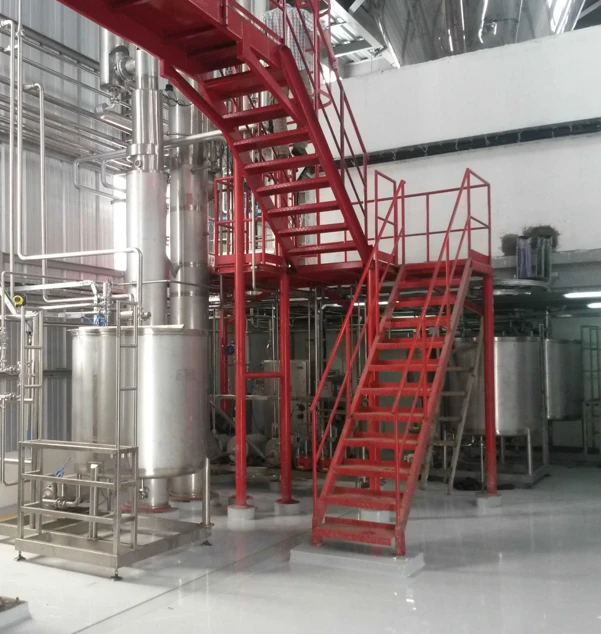
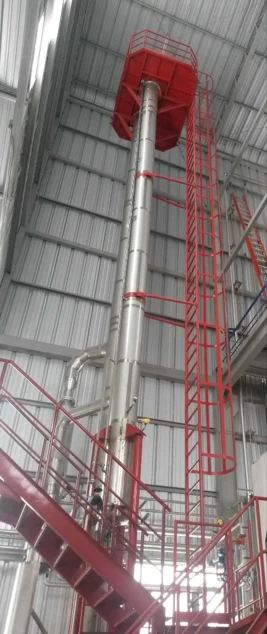
Achieve an optimal balance between evaporation performance and operating economy, ensuring final product quality through a gentle and controlled thermal treatment that minimizes temperature degradation.
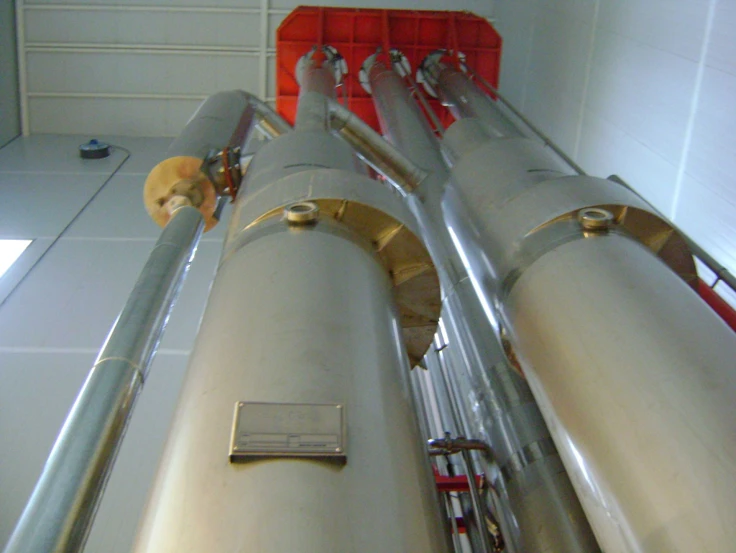
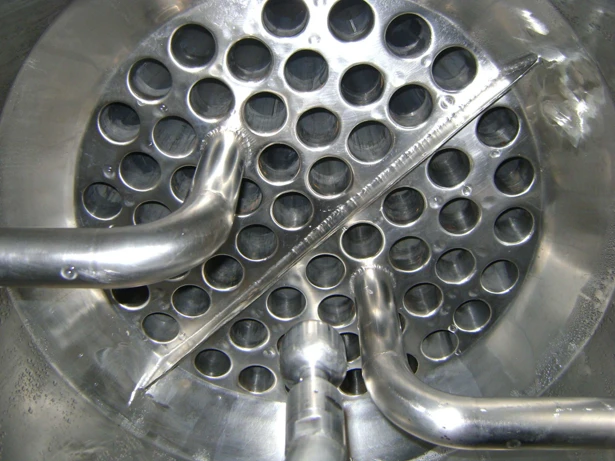
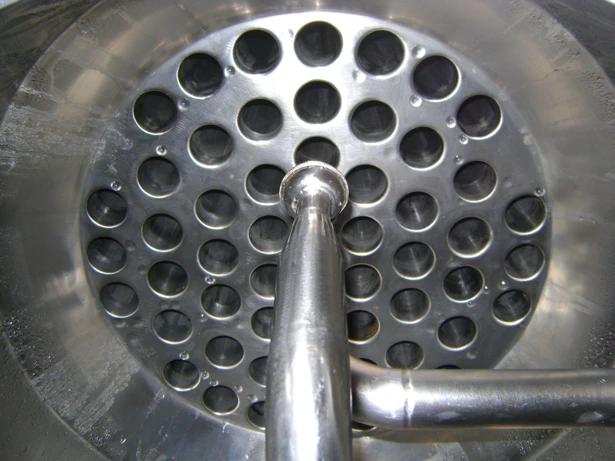
The feed is introduced at the top of the equipment, where a high-engineering distribution system ensures the product is evenly distributed across all tubes.
The liquid descends by gravity forming a thin film co-current with the generated vapor, which maximizes the heat transfer coefficient.
In the lower section, phase separation occurs: the concentrate is pumped to the next stage or outlet, and the vapor is directed to the condenser or reused in the next effect.
This design ensures constant 'wetting' of the tubes, avoiding dry spots that cause premature fouling and low efficiency.
•Superior Energy Efficiency (TVR/MVR): The system allows integration of multiple effects (where vapor from one body heats the next) and recompression technologies. The use of Thermal Vapor Recompression (TVR) or Mechanical (MVR) compresses the generated vapor for reuse as a heating medium, significantly reducing live steam demand and associated operating costs.
•Protection of Heat-Sensitive Products: Thanks to short residence times and precise control of operating temperatures, the organoleptic properties (flavor, aroma, color) of delicate products such as milk, fruit juices and coffee extracts remain unchanged.
•Sanitary Operation and CIP Cleaning: The vertical tubular design meets high hygiene standards and allows fast and simple Cleaning In Place (CIP) cycles. This minimizes downtime between production batches and ensures the sanitary compliance required in the food industry.
•Automation and Control: The system offers a high degree of automation to control critical thermodynamic variables (temperature, pressure, flow, level and concentration), reducing dependence on operating personnel and guaranteeing consistent product quality.